
C is for Creatine: The Supplement Every Woman Should Know About (But Probably Doesn't)
The wellness world loves a trend. But creatine? This one actually has the receipts.
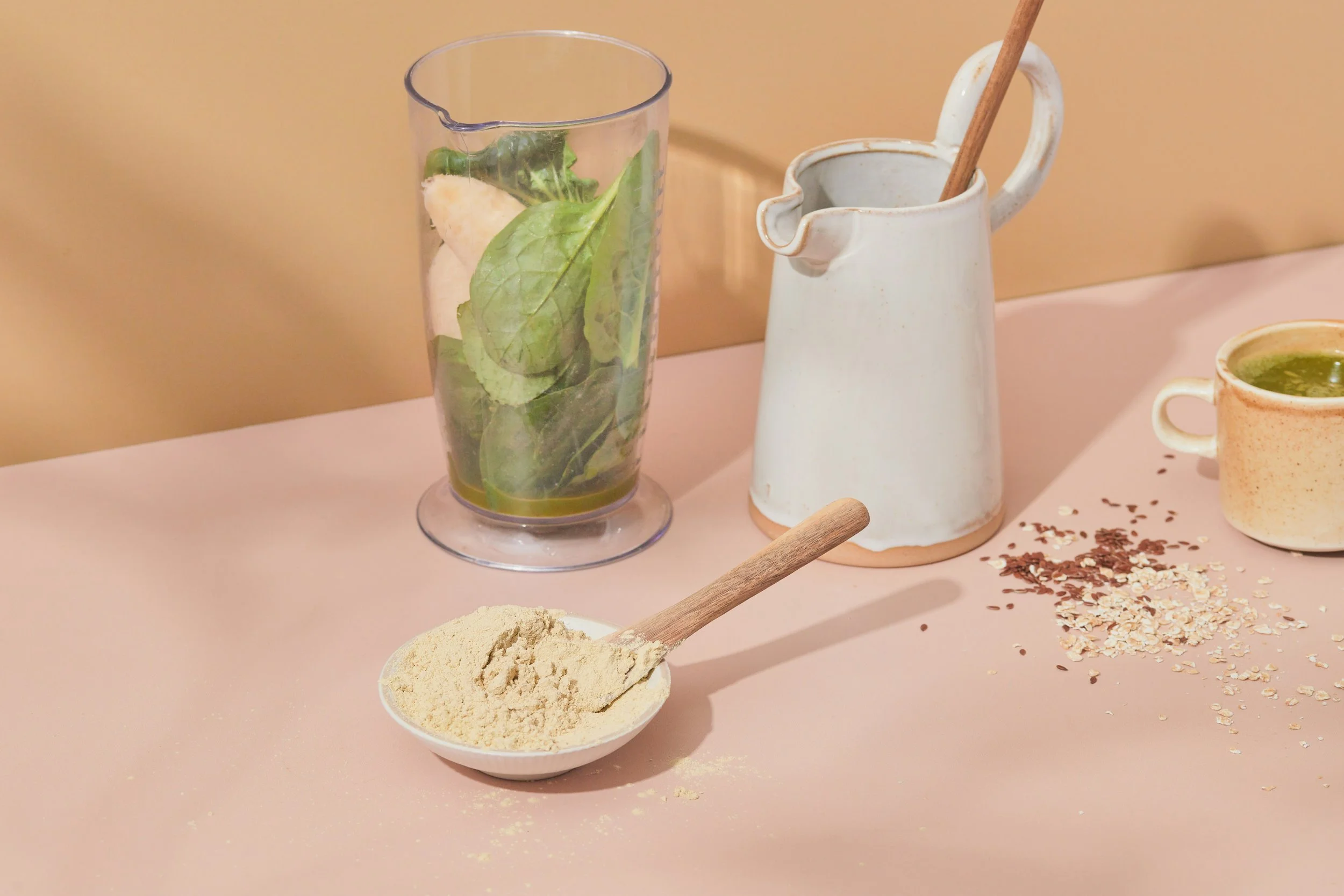
It's been quietly sitting in the back of supplement stores, mostly marketed to gym bros chasing biceps. But the science — and the sports medicine community — is making a very clear case that creatine is one of the most important supplements for women, and most of us aren't taking it.
Let's fix that.
So, What Actually Is Creatine?
Creatine is a molecule your body synthesizes naturally — predominantly in the liver, kidneys, and pancreas — at a rate of about 1 gram per day. It's made from two amino acids: glycine and arginine. Once produced, it's stored in your muscles as phosphocreatine, where it becomes your cells' rapid-fire energy currency during intense activity. nih
Think of it like a battery backup. When you're lifting heavy, sprinting, or doing anything high-effort, phosphocreatine helps regenerate ATP (adenosine triphosphate) — the cell's primary energy source. It helps you produce force faster, repeat high-quality efforts, and recover better between bouts of intense work. Dr Stacy Sims
You can get small amounts from food — red meat and fish being the main sources — but it's very difficult to get enough through diet alone.

Why Does It Matter So Much for Women?
Here's where it gets interesting — and honestly, a little infuriating that this hasn't been front-page wellness news sooner.
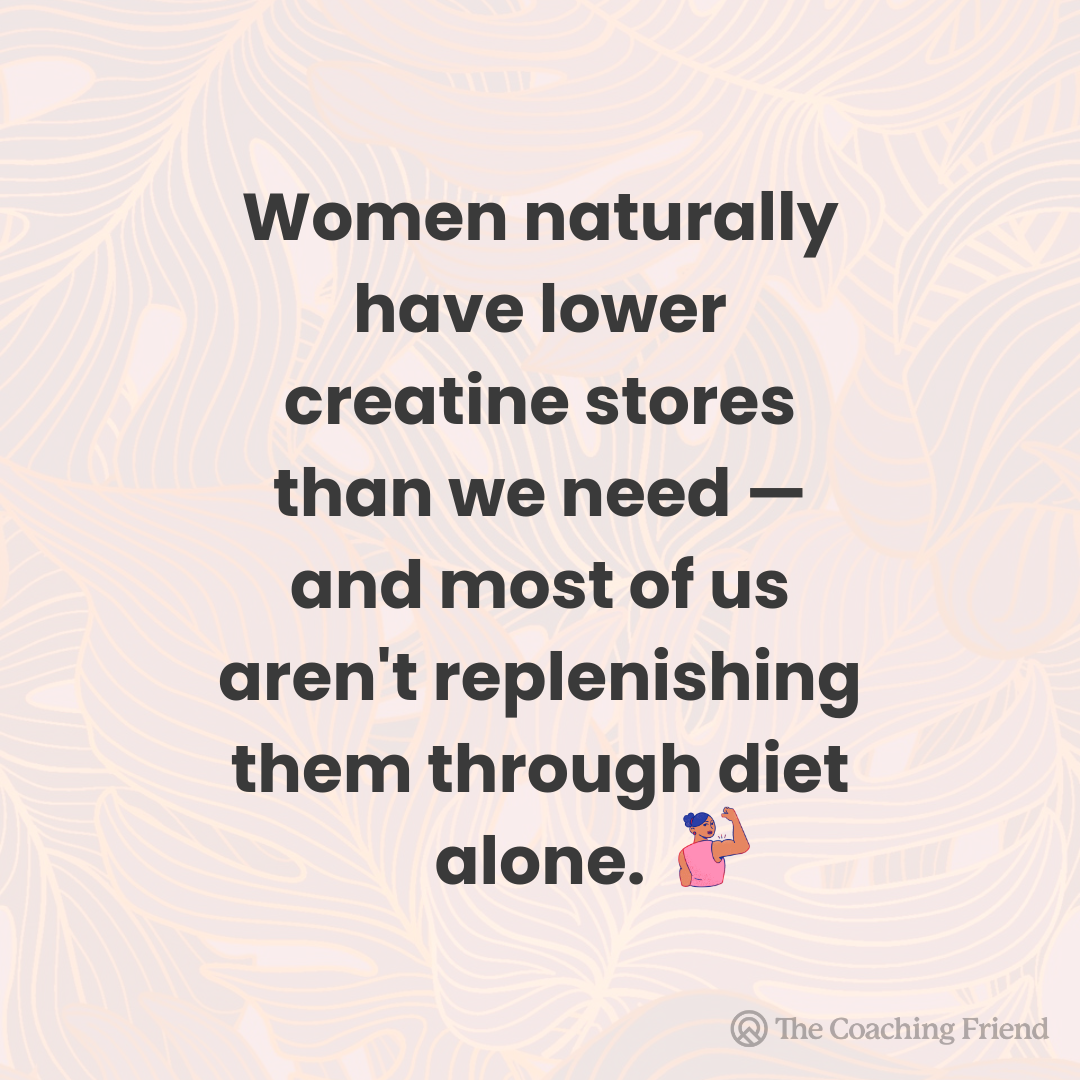
Here's what most people don't know: women's bodies naturally store far less creatine than they need. Research shows our endogenous stores are significantly lower than optimal — and diet alone won't bridge that gap unless you're eating unrealistic amounts of red meat and fish every single day. Smith-Ryan et al., 2021, Nutrients. For women especially, supplementation is where the real difference gets made.
Creatine supplementation has shown positive effects on muscle strength, exercise performance, and body composition — particularly when combined with resistance training.
Additionally, creatine may improve mood and cognitive function, potentially alleviating symptoms of depression. nih
And brain health? Small amounts of creatine are found in the brain, and emerging research suggests the compound may affect cognitive function — particularly supporting brain endurance, memory, and focus. HealthCentral
At What Age Should Women Start Caring About Creatine?

Short answer: now, whatever age you are. But certain life stages make it especially critical.
Due to hormone-related changes in creatine kinetics and phosphocreatine resynthesis, supplementation may be particularly important during menses, pregnancy, post-partum, during and post-menopause. nih
As estrogen levels decline in perimenopause and menopause, creatine combined with resistance training is associated with greater increases in lean mass and strength compared to training alone — helping preserve muscle quality and sustain overall training capacity as women move through midlife and beyond. Fast Life Hacks
Women in their 30s+ are wise to start building those stores before the hormonal shift hits. Think of it as a long-game investment in muscle, brain, and bone.
What's the Right Dose?
There's no real need to take more than 3–5 grams a day under normal circumstances. If you're unsure, start with just 1–2 grams. A daily dose of 3–5g will fully saturate muscle creatine stores within about three to four weeks, without the gastrointestinal issues that can come with a loading phase. Dr Stacy Sims
For post-menopausal women, research suggests that higher doses (0.3g per kg of body weight per day) for at least 7 consecutive days may be needed to see increases in muscle mass and function. That's worth discussing with your doctor or healthcare provider. PubMed Central
Should You Take It With Anything?
Yes — and this part is underrated.
When you consume carbohydrates and creatine together, the insulin response associated with carbohydrate intake aids creatine absorption and uptake into the muscle cells. Protein also stimulates an insulin response, allowing amino acids — and creatine — to be taken up more efficiently. Smeets & Graas
A published study in the Journal of Applied Physiology found that body creatine retention was augmented by approximately 25% when creatine was taken with a protein-carbohydrate combination compared to a low-carbohydrate treatment. American Physiological Society
The practical takeaway: Mix your creatine into a post-workout smoothie with protein and fruit, stir it into oatmeal, or add it to a recovery shake. It's tasteless and easy to use. One more note: some research suggests caffeine may inhibit creatine's uptake, so it's worth not mixing it into your morning coffee. Dr Stacy Sims
When Should You Take It?
Timing is not critical. What matters most is consistency — try to get into the routine of taking it at the same time each day. Many women find post-workout easiest to remember, which also happens to be a great time for absorption when paired with food. Dr Stacy Sims
Powder vs. Gummies — What Does the Science Say?
This one has a clear winner.
The most available evidence supports the effectiveness of creatine monohydrate, which should be considered the preferred form of creatine supplementation over other variants. nih
Creatine powder is generally more affordable, proven, and absorbs more quickly and efficiently by the body compared to gummies, which may have slower absorption due to their formulation. Landys Chemist
Gummies can work — but each gummy usually contains between 1 and 1.5 grams of creatine, meaning you need multiple gummies to hit a therapeutic dose. More gummies = more sugar and more cost. They're fun, but they're not the most efficient choice. iHerb
The verdict: Creatine monohydrate powder. Tasteless, flexible in dosing, and backed by decades of gold-standard research.
Which Brands Do Experts Actually Recommend?
Dr. Stacy Sims — exercise physiologist, nutrition scientist, author of ROAR and Next Level, and arguably the leading voice in female-specific sports science — is very specific: she recommends looking for brands using Creapure®, a high-purity, pharmaceutical-grade creatine monohydrate produced in Germany, free from contaminants and well tolerated by most people. One example is Momentous Creatine. Always look for supplements that are independently third-party tested by organizations such as NSF or Informed Sport. Dr Stacy Sims
Also worth noting: Dr. Sims warns that many side effects like nausea and bloating often come from cheaper acid-washed creatine powders, not from creatine itself. The water-based process used for Creapure® typically leads to fewer GI side effects. Momentous
Other researchers worth following: Dr. Abbie Smith-Ryan (UNC Chapel Hill), whose 2025 paper on creatine in women's health was the most-read paper in the Journal of the International Society of Sports Nutrition last year.
The Bottom Line
Creatine monohydrate is one of the most researched, safest, and most underutilised supplements for women. It's not just for athletes. It's for anyone who wants to protect their muscle, brain, and bones — especially through the hormonal transitions that define our 30s, 40s, and beyond.
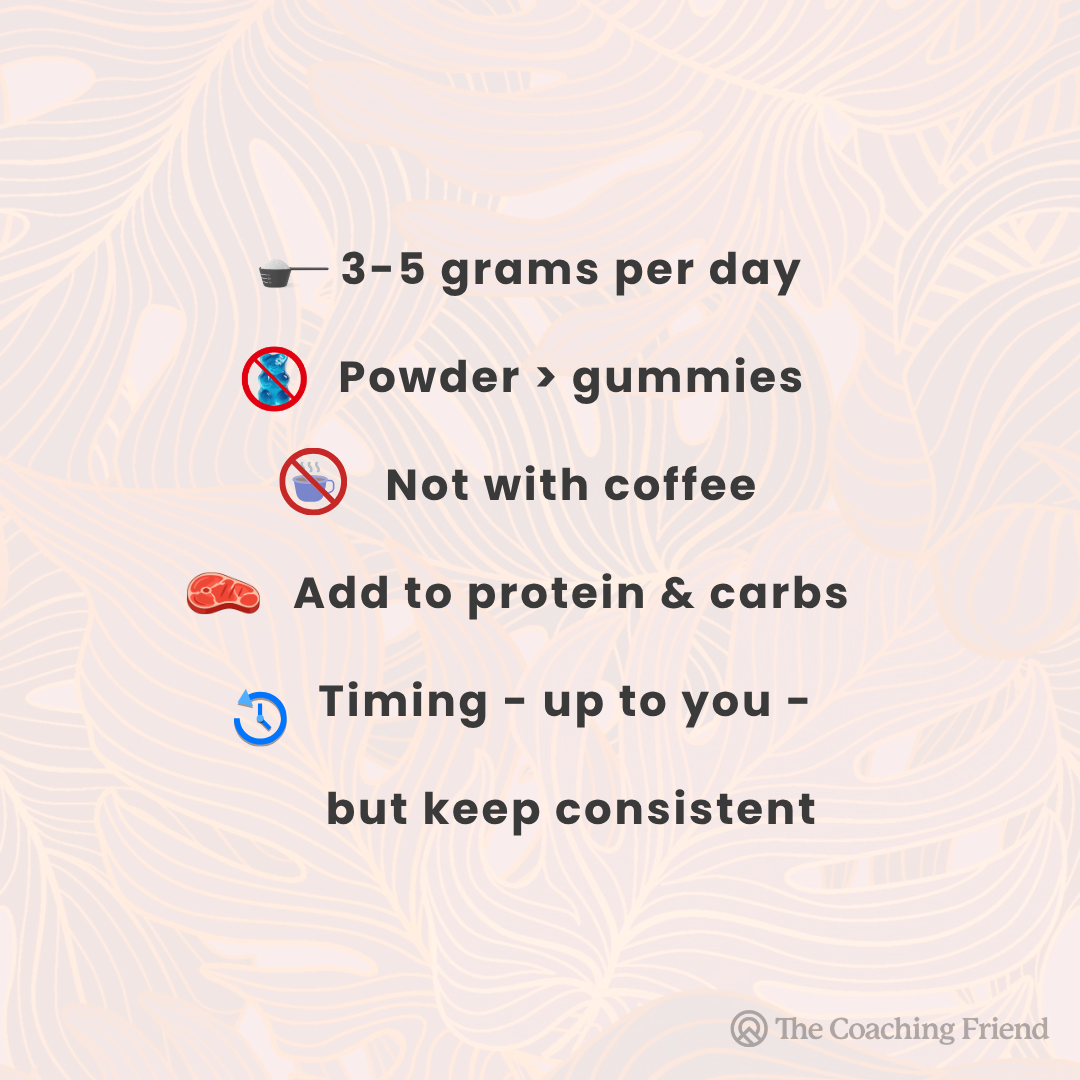
3–5g a day. Powder form. Creapure® if you can find it. Consistent timing. Paired with protein and carbs.
That's it. That's the whole protocol.
📚 Key References:
Gutiérrez-Hellín et al. (2024). Nutrients. DOI: 10.3390/nu17010095Smith-Ryan et al. (2021). Nutrients. PMC7998865Balestrino & Adriano (2019). Amino Acids. PMC12086928Steenge et al. (2000). Journal of Applied Physiology. DOI: 10.1152/jappl.2000.89.3.1165Dr. Stacy Sims: drstacysims.com/creatine-guide-for-active-women