
Why You Both Crave and Resent Your Routine (And What to Do About It)

I'm writing this from my back deck at 8pm on a Wednesday. No Netflix, no usual evening scroll — just me, a glass of something, and the kind of quiet that only happens when you do something slightly different with an ordinary night.
And it got me wondering: why does that feel so good? Why does a small change — even a tiny, almost-nothing shift — give such a noticeable lift?
Turns out, the psychology behind that feeling is fascinating. And it's connected to the same reason you sometimes feel trapped by the very routine you also desperately rely on.
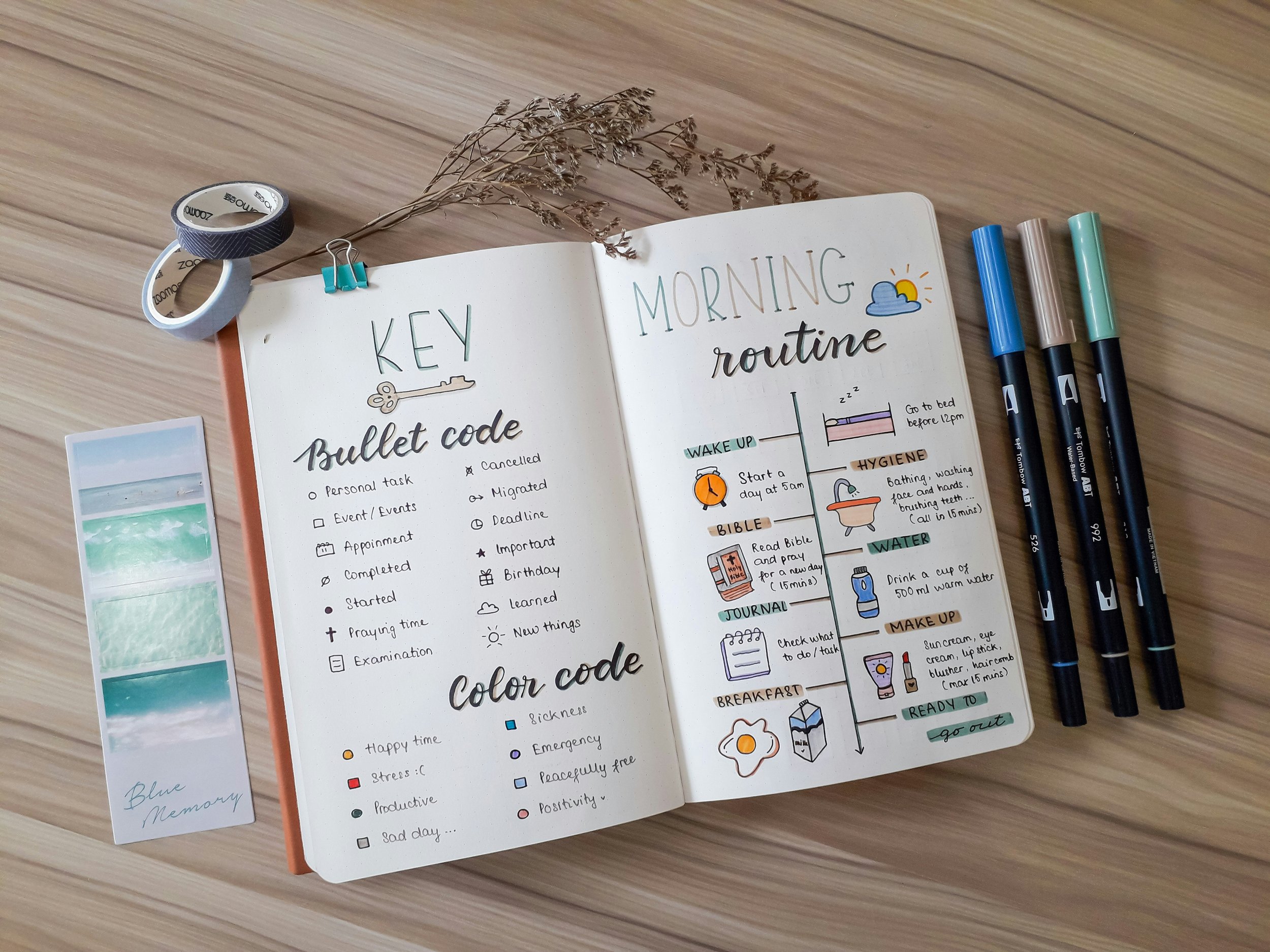
WHY YOUR BRAIN LOVES ROUTINE
Your brain is beautifully efficient. We are, as research puts it, "creatures of habit" — we naturally repeat the same behaviours in recurring contexts, and habit is the brain's efficient default mode of response. Every automatic school run, every Wednesday pasta night, frees up mental bandwidth for what actually needs your attention.
Routine also quietly satisfies something deeper. According to Self-Determination Theory, one of psychology's most robust frameworks, humans have three core psychological needs — competence, autonomy, and relatedness — the satisfaction of which are essential nutrients for effective functioning and wellbeing. A routine you've chosen and own can tick all three boxes at once. The part of you that loves your routine isn't weak. It's wise.

WHY YOUR BRAIN ALSO RESENTS IT
And yet — there you are, making the same lunch for the fourth time this week, and something in you wants to walk straight out the front door.
Meet the hedonic treadmill. The theory proposes that we continuously return to the same level of happiness regardless of what happens to us. Good events temporarily boost how we feel, but over time, wellbeing returns to baseline. That once-exciting job, that beautifully organized pantry, that fitness goal you crushed — eventually, they all just become Wednesday. The brain adapts, the dopamine fades, and what was novel becomes invisible.
And here's what makes the restlessness even more valid: researchers are now making the case that novelty isn't just a nice-to-have. Novelty satisfaction has been found to positively predict vitality, life satisfaction, and meaning in life, while novelty frustration negatively predicted these same outcomes. Your craving for something different isn't ingratitude. It's a genuine psychological need, quietly going unmet.
THE SWEET SPOT: SMALL DOSES OF DIFFERENT
You need structure. You need newness. At the same time. Welcome to being human.
The good news? You don't need to overhaul your calendar. Research on the Hedonic Adaptation Prevention model found that one of the most powerful ways to sustain wellbeing is simply continued variety in experiences, which forestalls the erosion of happiness gains so that an initial positive boost can persist.
And the brain science behind why novelty works is genuinely exciting. Curiosity and creativity have been found to emanate from the same novelty-seeking mechanism, activating the same brain networks — the default mode network, the salience network, and the executive control network. When you seek out something new, you're not just enjoying a change of scenery. You're lighting up the neural circuitry behind imaginative thinking and creative insight. Novel stimuli excite dopamine neurons and drive exploratory behaviour — even in small, quiet doses.
Like sitting on your back deck instead of the sofa.

5 MICRO-NOVELTY IDEAS (for a busy, full life)
These take ten minutes or less, twice a week:
Change one sensory input — a different route, an unfamiliar podcast genre, a new playlist
Try one ingredient you've never cooked with — the goal isn't gourmet, it's just different
Call someone you haven't spoken to in over a year — unexpected connection is one of the fastest novelty boosts
Spend 10 minutes learning something completely outside your world — a documentary clip, a random Wikipedia rabbit hole, a topic that has nothing to do with your to-do list
Do a familiar task somewhere new — a different room, a coffee shop, outside. People adapt more slowly to varied and novel stimuli, and variety in everyday experience has been directly linked to greater positive emotion. Changing context alone is enough.
SOMETIMES YOU NEED SOMEONE TO HELP YOU SEE IT
Here's the thing about routines: when you're deep inside one, it can be genuinely hard to notice what's draining you and what's sustaining you. That's not a personal failing — it's just how immersion works. We stop questioning what's always been there.
This is one of the quieter but most valuable things a health coach does. Not telling you what to change, but helping you see what you've stopped noticing — where the routine is serving you, where it's slowly flattening you, and what small shifts might bring you back to yourself. Sometimes the most important question isn't "what should I do differently?" It's simply "what do I actually need right now?" — and having someone ask that question, and hold the space for you to answer it honestly, can change everything.
If that sounds like something you're ready for, I'd love to chat. Click here to schedule a free chat.
THE TAKEAWAY
Comforted and restless at the same time? That's not a contradiction. That's two very real psychological systems running simultaneously — one pulling you toward safety, one pulling you toward aliveness.
You don't have to choose. You just have to feed both.
Even twice a week. Even from your back deck on a Wednesday night.
With warmth,
Sally
References Wood, W., & Neal, D.T. (2016). Psychology of Habit. Annual Review of Psychology, 67, 289–314. https://pubmed.ncbi.nlm.nih.gov/26361052/Ryan, R.M., & Deci, E.L. (2000). Self-Determination Theory and the Facilitation of Intrinsic Motivation, Social Development, and Well-Being. American Psychologist, 55(1), 68–78. https://selfdeterminationtheory.org/SDT/documents/2000_RyanDeci_SDT.pdfBrickman, P., & Campbell, D.T. (1971). Hedonic Relativism and Planning the Good Society. Referenced and discussed in: Diener, E., Lucas, R.E., & Scollon, C.N. (2006). Beyond the Hedonic Treadmill: Revising the Adaptation Theory of Well-Being. American Psychologist, 61, 305–314. https://pubmed.ncbi.nlm.nih.gov/16719675/Lyubomirsky, S., & Sheldon, K.M. (2012). Hedonic Adaptation Prevention Model. Personality and Social Psychology Bulletin. https://journals.sagepub.com/doi/abs/10.1177/0146167212436400González-Cutre, D., et al. (2020). Testing the Need for Novelty as a Candidate Need in Basic Psychological Needs Theory. Motivation and Emotion, 44, 295–314. https://link.springer.com/article/10.1007/s11031-019-09812-7Ivancovsky, T., Baror, S., & Bar, M. (2023). A Shared Novelty-Seeking Basis for Creativity and Curiosity. Behavioral and Brain Sciences, 46. https://www.cambridge.org/core/journals/behavioral-and-brain-sciences/article/abs/shared-noveltyseeking-basis-for-creativity-and-curiosity/F812089A4E78C25A4A01C86EB2C873A1Leong, L.K., et al. (2024). Does Variety in Hedonic Spending Improve Happiness? BMC Psychology. https://bmcpsychology.biomedcentral.com/articles/10.1186/s40359-024-01599-8Averbeck, B.B., et al. (2018). Dopamine Modulates Novelty Seeking Behavior During Decision Making. PMC/Frontiers in Behavioral Neuroscience. https://pmc.ncbi.nlm.nih.gov/articles/PMC5861725/